Hi, I’m

Jai Bellare

3rd year B.Tech. student in Electrical Engineering at IIT Bombay (Mumbai, India).

I'm looking for internship roles in semiconductor device fabrication, characterisation, packaging, medical devices, neurotech, quantum computing technology, digital/analog VLSI design.

Contact me at hi@jaibellare.com. Schedule a meeting at cal.com/jaibellare.

Research internship
May – July 2027
PhD
August 2028 onwards
IITB Nanofab
Dec ’25 — now

Fabrication of Oxide-Channel Thin-Film Transistors for eDRAM Technology

Guide: Prof. Veeresh Deshpande, Dept. of Electrical Engineering
  1. Utilized fabrication tools like Atomic Layer Deposition (ALD), RF Sputter, Photolithography (Laser Writer)
  2. Pulsed IV using Waveform Generator/Fast Measurement Unit (WGFMU), and measured gate stack thickness using Ellipsometer, and surface topology using Profilometer.
  3. Designed lithography masks (KLayout, Python scripting) with 100nm-length channels, for Electron Beam Lithography tool.
  4. Currently fabricating Dual Gate ITO channel FETs and studying gate oxide optimization.
HackerFab IITB
Nov ’25 — now

India’s first student-built semiconductor fab, to democratize fab education

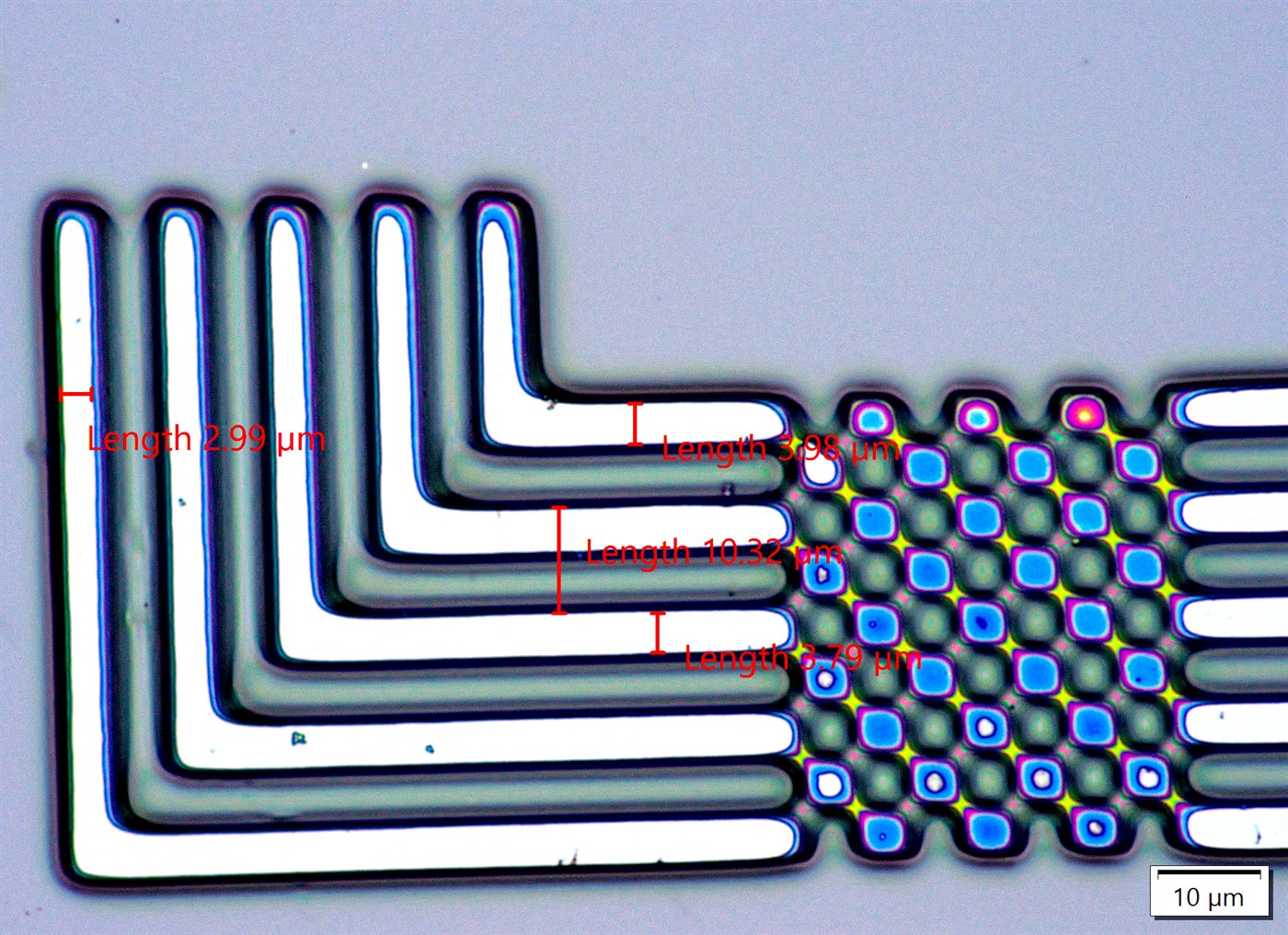
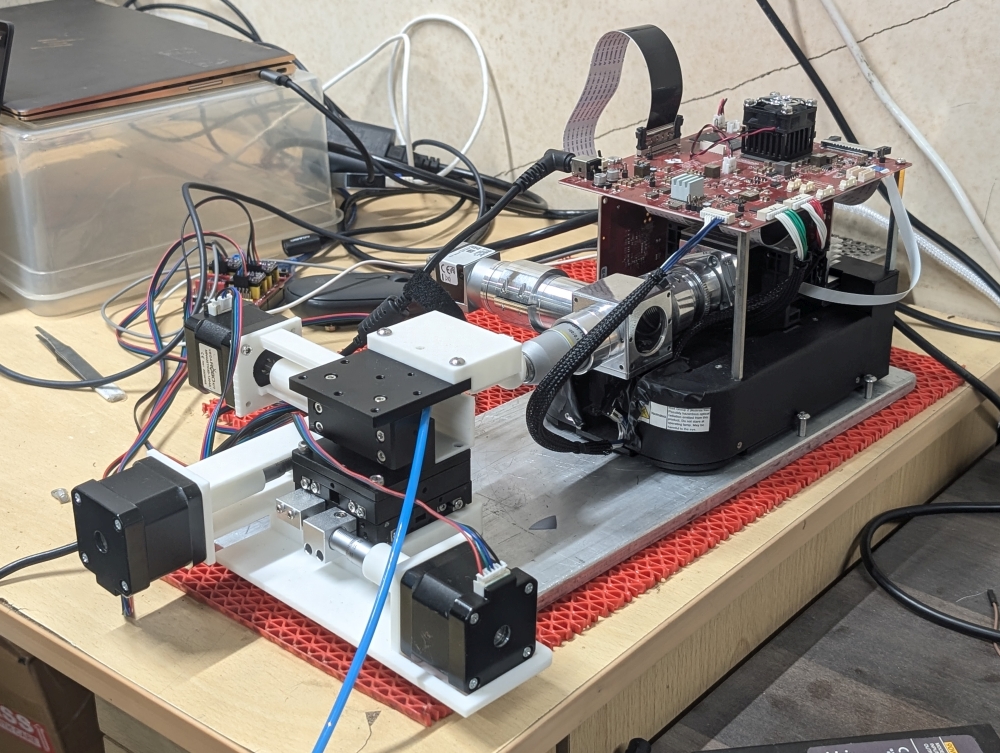
Direct-write photolithography system Lithography pattern
  1. Built a complete, low-cost, educational toolset and process for semiconductor device fabrication, including photolithography, sputter, tube furnace, and doping
  2. Developed a process for fabrication and characterisation of working MOSCAPs and Diodes
  3. Released open-source build guides to enable replication by colleges across India.

Lithography

  1. Developed a direct-write photolithography system using a Digital Micromirror Device (DMD) for image formation, combined with UV illumination and reduction lenses to achieve 5 micron minimum feature size within a Rs. 2 lakh budget.
  2. Engineered a motorized XYZ stage using ball-screws, stepper motors and a vacuum chuck.
  3. Implemented optical closed-loop control to achieve 2 micron repeatability, as well as image tiling and overlay.
  4. Characterized developed photoresist cross-section using Bruker DektakXT profilometer to verify feature size.

Funding, Outreach and Press Coverage

  1. Raised Rs. 1 crore funding as part of HackerFab main team for Fab-in-a-Box: a turnkey mini-fab shipped to Indian colleges to set-up fab teaching capabilities overnight. Funding agency: IIT Bombay ACR, PI: Prof. Veeresh Deshpande
  2. Held a demo-day for >200 students from outside IITB, to teach them how to build their own tools.
  3. Covered extensively in articles by Swarajya Magazine and Times Now, and a deep-dive video by RuntimeBRT.
  4. Won User Design Track at 39th International Conf. On VLSI Design for our DIY toolkit
Uni Stuttgart
May — Jul ’25

Research Internship: Driver Safety App using real-time pose tracking

Guide: Prof. Dr.-Ing. Jörg Fehr, Deputy Head, Institute of Engineering and Computational Mechanics (ITM)
driving simulator
pose tracking screenshot
  1. Developed a mobile app to track driver behaviour and warn for unsafe driving positions in real-time
  2. The app democratizes ADAS (Advanced Driver Assistance Systems) features to consumers without access to expensive in-vehicle hardware, such as in developing markets like India.

Monitoring Unsafe Behaviours

  1. Tested Apple’s ARKit with LiDAR for pose estimation in Unity, deeming it unsuitable for real-time use
  2. Built a Computer Vision model in javascript on top of Tensorflow BlazePose for upper body tracking, to detect drivers excessively leaning forward or backward, or taking their hands off the wheel
  3. Learnt biomechanical Human Body Models (HBM) to study the range of body motion during crashes
  4. Performed eye tracking to detect distracted driving, due to drowsiness or mobile phone usage

Testing on Driving Simulator

  1. Tested the app on the ITM’s Driving Simulator, with users subjected to various vehicle collisions
  2. Used MATLAB for real-time data collection, and to provide visualization and user feedback

Characterizing Detection Accuracy and Latency

  1. Evaluated the app’s accuracy using the OptiTrack motion capture system for reference
  2. Tuned the model outputs to achieve 5 degree maximum error in head turn detection
  3. Optimized the app to attain 30 ms maximum latency, running in real-time on mid-range smartphones